


Alloy Wire International
Datasheet: Nickel® 205
Nickel® 205
Nickel® 205 is similar to Nickel® 200, but has compositional adjustments to enhance its performance in electrical and electronic applications. Nickel® 205 exhibits exceptional mechanical, electrical and corrosion-resistant properties, as well as good oxidation resistance.
Nickel® 205 is also known as VDM Nickel 99.6.
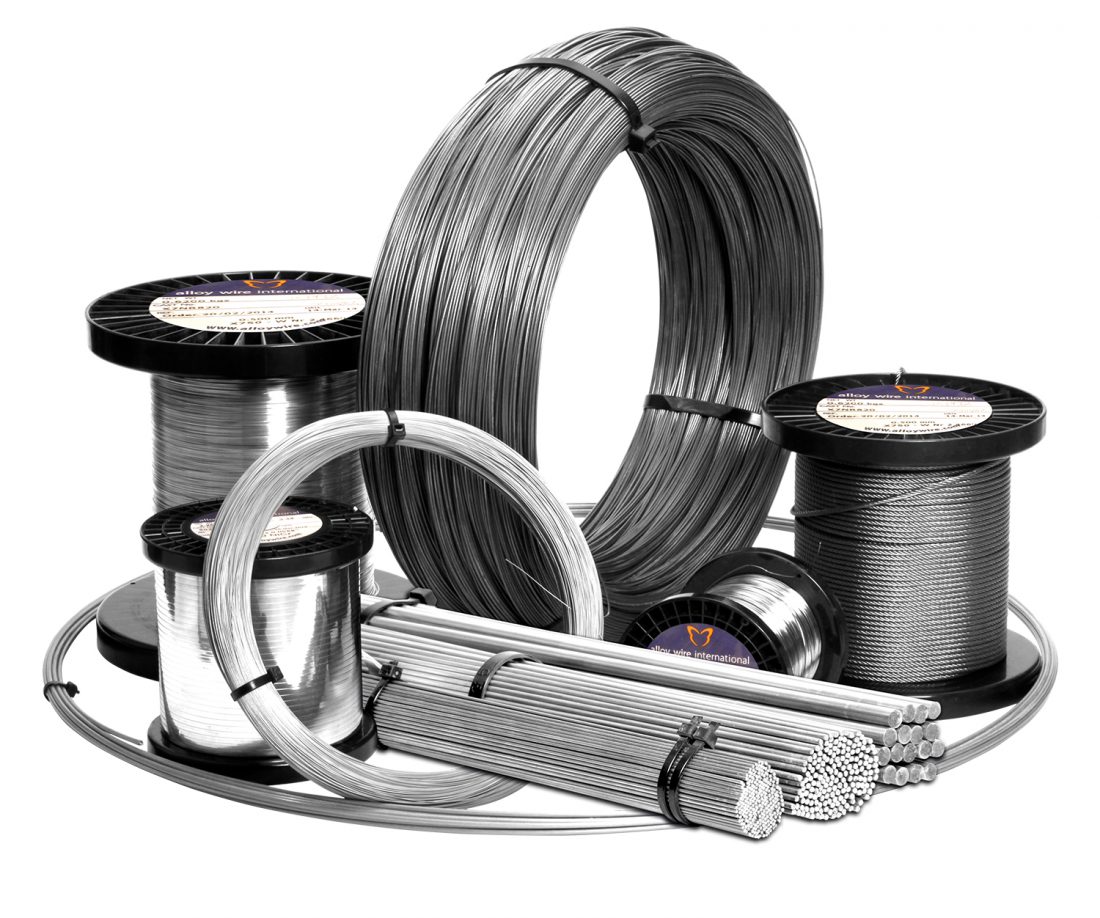
Available in all profile options


Key Features
Nickel® 205 offers the following key features:
Similar to Nickel 200 but has compositional adjustments to enhance its performance in electrical and electronic applications.
Typical Applications
Nickel® 205 is known to be suitable for the following applications:
Anodes and grids of electronic valves
Lead wires
Transistor housings
Magneto-strictive transducers
Designations
W.NR 2.4061
UNS N02205
AWS 072
Specifications
–
Chemical Composition
The chemical composition of Nickel® 205 is indicated in the table below:
| Element | Min % | Max % |
|---|---|---|
| Ni | 99.0 | – |
| Mg | 0.01 | 0.08 |
| Ti | 0.01 | 0.05 |
| Cu | – | 0.15 |
| Fe | – | 0.20 |
| C | – | 0.15 |
| Si | – | 0.15 |
| S | – | 0.008 |
| Mn | – | 0.35 |


Alloy Details
Nickel® 205 density, melting point, coefficient of expansion, modulus of rigidity, and elasticity is indicated in the table below:
| Density | Melting Point | Coefficient of Expansion | Modulus of Rigidity | Modulus of Elasticity |
|---|---|---|---|---|
| 8.89 g/cm³ | 1446 °C | 13.3 μm/m °C (20 – 100 °C) | 82 kN/mm² | 207 kN/mm² |
| 0.321 lb/in³ | 2635 °F | 7.4 x 10⁻⁶ in/in °F (70 – 212 °F) | 11893 ksi | 30000 ksi |
Nickel® 205 electrical resistivity is indicated in the table below:
| Electrical Resistivity | |
|---|---|
| 9.5 μΩ • cm | 57 ohm • circ mil/ft |
Nickel® 205 thermal conductivity is indicated in the table below:
| Thermal Conductivity | |
|---|---|
| 75 W/m • °C | 520 btu • in/ft2 • h • °F |
Properties
The typical mechanical properties of Nickel® 205:
| Condition | Approx. tensile strength | Approx. operating temperature |
|---|---|---|
| Annealed | <500 N/mm² (<73 ksi) | Tensile strength and elongation drop significantly at temperatures above 315 °C (600 °F). Service temperature is dependent on environment, load and size range. |
| Hard Drawn | 700 – 900 N/mm² (102 – 131 ksi) | Tensile strength and elongation drop significantly at temperatures above 315 °C (600 °F). Service temperature is dependent on environment, load and size range. |
The above tensile strength ranges are typical. If you require different please ask.
*Trade name of Special Metals Group of CompaniesConductive